
A Study in Design and Community
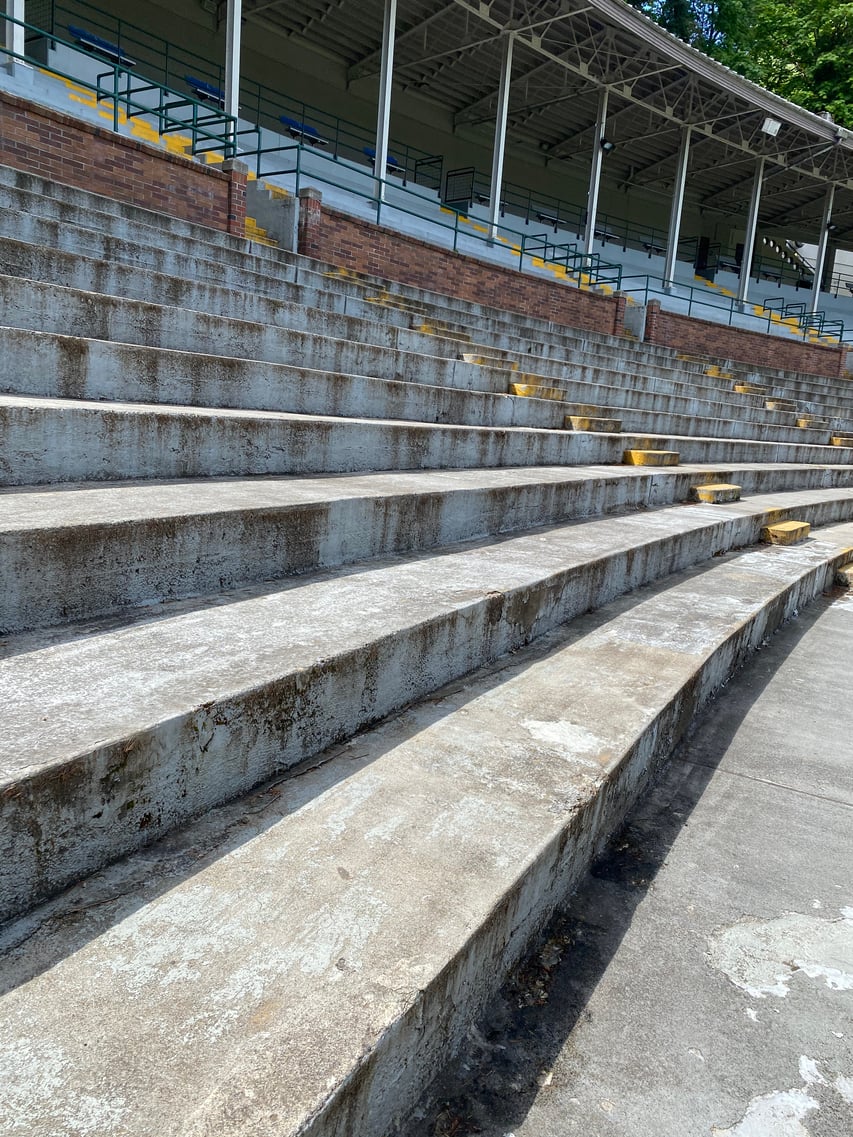
Kiggins Bowl stands as a cherished symbol of Vancouver's sporting heritage, tracing its roots back to the vision of Mayor JP Kiggins, who, in 1930, transformed a plateau within the newly donated Leverich Park into a thriving athletic complex. By 1933, it had become a sprawling venue capable of accommodating three football fields, surrounded by a half-mile running track and a baseball diamond, nestled within a natural amphitheater. The ambitious construction of the stadium commenced in 1937 and culminated in the grandstand's completion in 1939, a project costing $200,000, equivalent to $4 million today. Despite its grandeur, Kiggins Bowl faced initial skepticism, with a National Recreation Association Representative branding it a "monstrosity" ill-suited for sporting events. Yet, through perseverance and community support, the stadium underwent successive rounds of renovations. In November 1945, lights were installed, and the bleacher section received an extended roof, transforming the stadium's amenities. However, the challenges persisted, such as inadequate drainage, earning the venue the notorious nickname "the soup bowl" by 1967. Yet, the resilience of the community shone through in April 1968, as a grassroots fundraising effort revitalized the stadium, installing new lights and a modern drainage system.
The evolution of the Kiggins Bowl continued into the modern era, marked by milestones such as the installation of artificial turf in the summer of 1997, making it the country's first artificial turf field. Later renovations, including replacing the turf in 2008 and renaming the stadium to "Boggs Field" in 2011 in honor of Coach Boggs who led the local high school team the "Trappers" from 1965 to 2000, further cemented its status as a cultural landmark.
"Once I learned about the scale of the renovation that was planned, I said, 'Why don't we just tear it down and start from scratched,'" Chuck Stiller, Vancouver Public Schools Projects Manager, said, "And the reaction I got was like I had just killed someone's dog."
While renovating historic sites like Kiggins Bowl may not always be the most cost-effective solution, it is crucial for preserving community heritage and maintaining cultural landmarks. Following decades of service, Kiggins Bowl recently underwent a monumental transformation, representing the most significant renovation in its storied history. Spearheaded by Vancouver Public Schools Projects Manager Chuck Stiller, the renovation project, spanning 15 months from January 2021 to April 2022, aimed to modernize the iconic stadium while preserving its historical charm. Despite initial skepticism about the scale of the renovations, the community rallied behind the project, recognizing the importance of revitalizing this beloved landmark. The upgrades addressed longstanding deficiencies, offering spectators an enhanced game-day experience with the replacement of concrete seating with aluminum bleachers and even seatbacks on the home side.
Key improvements included:
- Replacement of Concreate Seating: Concreate seating was replaced with aluminum bleachers and seatbacks on the home side.
- Additional Press Box: A second press box was added to support the student-led video production program.
- New Field House: The outdated dressing rooms underneath the stadium were replaced with a new field house, providing modern amenities such as nicer bathrooms, a second concession stand, and changing rooms for officials.
- Expanded Athletic Facilities: Installation of a second Athletic Turf fields and a 6-lane track expanded the stadium's capabilities, offering enhanced facilities for athletes and community members alike.
- Safety Upgrades: Weatherproofing the concrete throughout the grandstand and seismic upgrades to the stadium roof emphasized the commitment to safety and longevity.
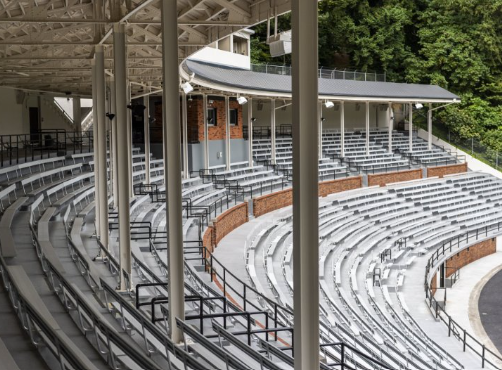
Working with experienced manufacturers who possess the design resources and expertise is crucial for ensuring successful renovation projects. Although renovations in this instance were not a cost-saving measure, they were essential for preserving the historical and cultural significance of Kiggins Bowl. Kiggins Bowl has stood as a steadfast symbol of Vancouver's sporting legacy for almost eight decades. With each successive renovation and upgrade, Kiggins Bowl has evolved to meet the changing needs of the community while remaining true to its historical roots. The unwavering love and support from the community ensure that Kiggins Bowl will continue to inspire generations and create lasting memories for all who pass through its gates. Through its enduring legacy, Kiggins Bowl serves as a testament to the power of sport to unite communities, inspire generations, and create lasting memories.